
Part two
Part Two
YES, CUSTOMERS LIE TOO!
WHEN “THE CUSTOMER IS ALWAYS RIGHT” GOES TOO FAR
The guest was gone.
The $500 had been paid.
You would think the matter was over.
It wasn’t.
The moment the guest walked out of the hotel, the Managing Director's entire demeanour changed.
He asked me to call Wale, the housekeeping attendant, and the Security Manager into his office.
I did.
When Wale walked in, the atmosphere immediately became tense.
The MD looked directly at him.
“Did you take the money?”
Wale said no.
Again.
Calmly.
But the MD wasn’t convinced.
He told Wale that he believed he had stolen the money.
I watched the young man’s face change.
His shoulders dropped.
He looked deeply disappointed.
He wasn’t argumentative.
He wasn’t aggressive.
He simply became very quiet.
I avoided his eyes.
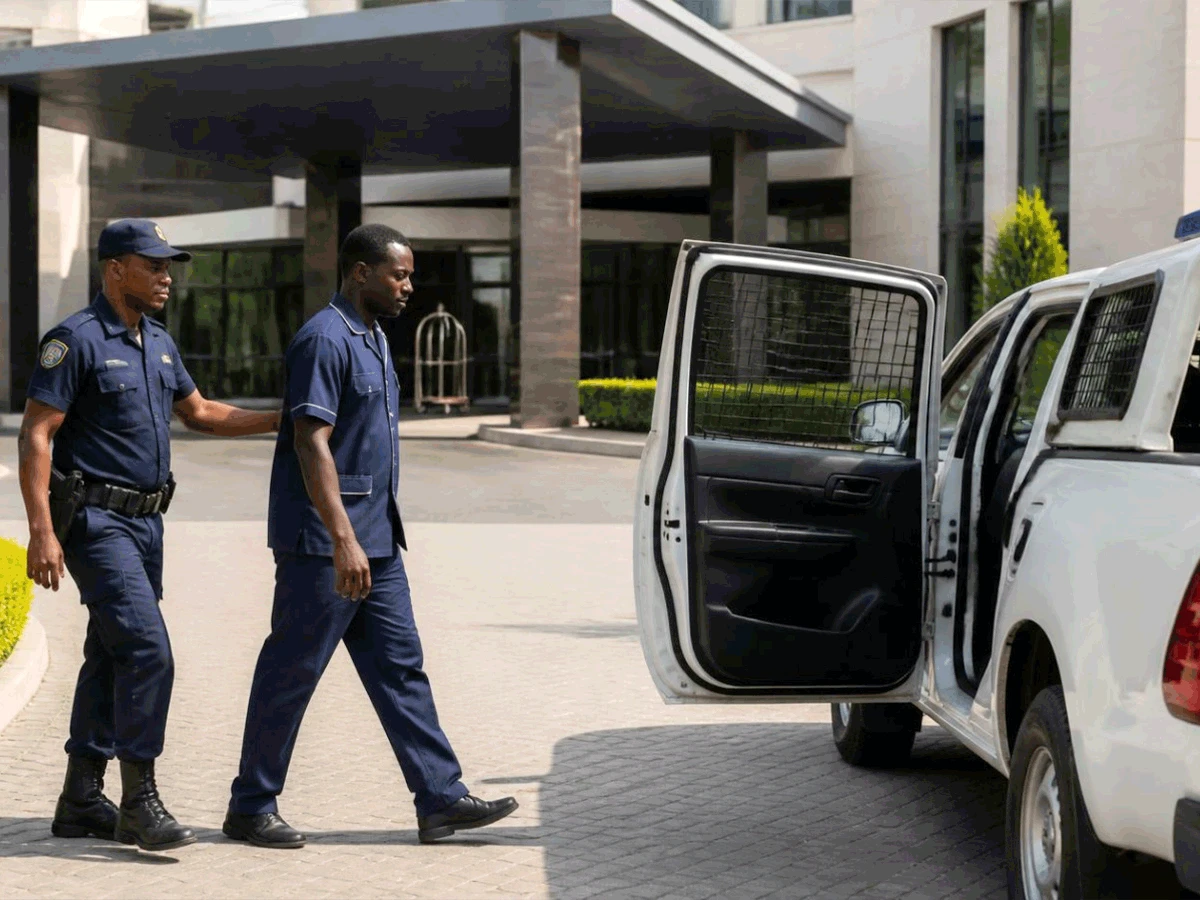
The Security Manager took him away.
They got into a vehicle and drove straight to the police station.
NEWS TRAVELS FAST IN A HOTEL
Before I even got back to my office, employees were already waiting for me.
They had heard.
Their faces were gloomy.
Everyone wanted to know what had happened.
I had no answers to give them.
So I kept quiet.
I sat at my desk and tried to gather myself.
Then my personal phone rang.
It was the Security Manager.
I was needed at the police station.
Apparently, I needed to explain the matter properly.
I felt cold.
And very upset.
When I arrived at the station, an officer introduced himself as the IPO — the Investigating Police Officer.
He explained that because the hotel was alleging that Wale had stolen money from a guest, I needed to make a statement on behalf of the organisation.
A pen and paper were placed in front of me.
And I began to write.
Everything.
The complaint. The CCTV review. The door-lock records. Wale’s denial. The guest’s behaviour. The payment of the $500. The entire sequence of events.
I told the truth.
When I finished, the officer read my statement.
Then he started shaking his head.
He called Wale.
Again, he asked him: “Did you take the money?”
Wale shook his head.
“No, sir. I did not take any money.”
The officer looked at me.
He couldn’t see the substance of a criminal case.
And, frankly, neither could I.
He asked a very simple question:
If the organisation believed Wale was responsible, why couldn’t the matter have been handled internally?
He explained that, based on the information available, there wasn’t tangible evidence proving that Wale had stolen the money.
He also explained our options.
The police could not hold Wale indefinitely.
THE TWO OPTIONS
• Take him back to the hotel and find a way to resolve the matter internally.
• Leave him at the station and proceed with charging him to court. If we chose the second option, we would need to return the following morning and accompany him to the Magistrate Court.
I told the officer that the decision wasn’t mine alone. I needed to report back to my MD.
Before leaving, I pleaded with him to allow Wale to remain safely behind the counter until we returned with a decision.
The Security Manager and I drove back to the hotel.
On the way, I kept thinking about the guest.
Where was he now?
Was he sitting comfortably in a taxi?
Was he already on his flight?
Did he have any idea what was happening to the employee he had accused?
I doubted it.
He had made his complaint.
He had received his $500.
He had left.
Life had moved on for him.
But for Wale, life had just been turned upside down.
“I WANT TO PROSECUTE”
I went straight into the MD’s office.
I explained what had happened at the police station.
He listened quietly.
I felt relieved.
Surely, after hearing the police officer’s assessment, he would choose the sensible option.
We could resolve the matter internally.
We could put appropriate measures in place.
We could investigate further.
We could move on.
I waited for his response.
He looked at me.
“I want to prosecute.”
I was transfixed.
Speechless.
I got up.
“I have heard,” I said.
And I walked out.
Straight to the restroom.
I felt like vomiting.
I was dizzy.
I stayed there for a while.
When I eventually came out, I walked into the kitchen and asked the Executive Chef to prepare some food for Wale.
He was going to spend the night at the police station.
It was already around 2:30 p.m.
I hadn’t done any of the things on my work schedule that day.
But how could I?
My mind was completely occupied.
When the food was ready, I picked it up and returned to the police station.
I told the IPO about the MD’s decision.
The officer laughed — not because it was funny, but because he couldn’t understand why we were choosing to complicate matters.
“Why una just wan waste una time now? Abi wetin this boy do your oga?”
I couldn’t laugh.
I handed the food to Wale and explained that the MD had decided to prosecute.
He looked completely lost.
Then he broke down in tears.
I had to look away.
I couldn’t sleep that night.
TO BE CONTINUED....
No Comment
Your email address will be not be published. Required fields are marked.